


Machine Learning
Machine learning is a branch of artificial intelligence (AI) and computer science which focuses on the use of data and algorithms to imitate the way that humans learn, gradually improving its accuracy.
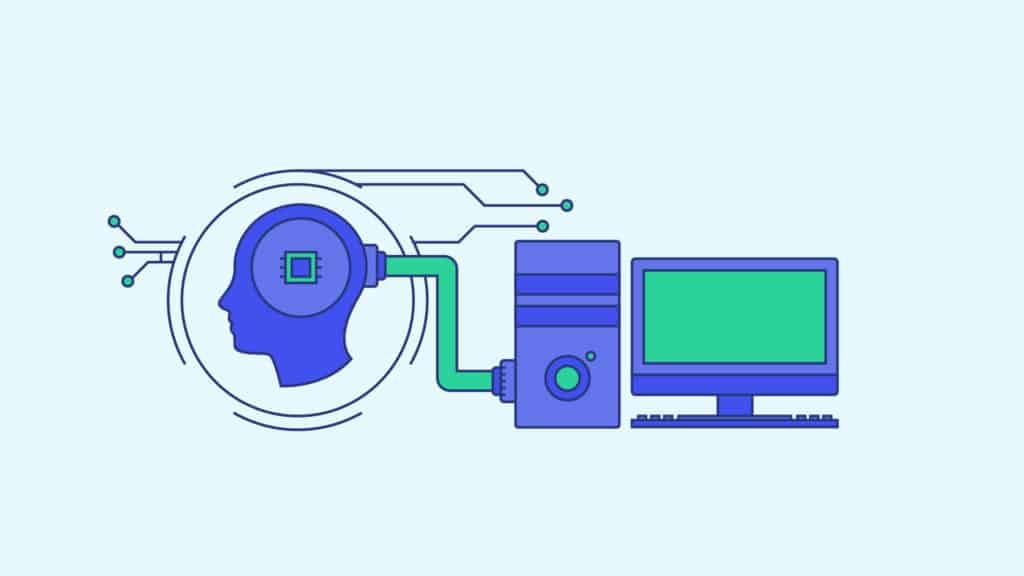
IBM has a rich history with machine learning. One of its own, Arthur Samuel, is credited for coining the term, “machine learning” with his research (PDF, 481 KB) (link resides outside IBM) around the game of checkers. Robert Nealey, the self-proclaimed checkers master, played the game on an IBM 7094 computer in 1962, and he lost to the computer. Compared to what can be done today, this feat seems trivial, but it’s considered a major milestone in the field of artificial intelligence.
Over the last couple of decades, the technological advances in storage and processing power have enabled some innovative products based on machine learning, such as Netflix’s recommendation engine and self-driving cars.
Machine learning is an important component of the growing field of data science. Through the use of statistical methods, algorithms are trained to make classifications or predictions and to uncover key insights in data mining projects. These insights subsequently drive decision-making within applications and businesses, ideally impacting key growth metrics. As big data continues to expand and grow, the market demand for data scientists will increase. They will be required to help identify the most relevant business questions and the data to answer them.
Machine learning algorithms are typically created using frameworks that accelerate solution development, such as TensorFlow and PyTorch.
Machine Learning vs. Deep Learning vs. Neural Networks
Since deep studying and gadget learning have a tendency to be used interchangeably, it’s worth noting the nuances between the 2. Machine gaining knowledge of, deep mastering, and neural networks are all sub-fields of synthetic intelligence. However, neural networks is virtually a sub-discipline of the system getting to know, and deep studying is a sub-field of neural networks.
The way wherein deep mastering and device mastering vary is in how each algorithm learns. "Deep" gadget studying can use labeled datasets, additionally known as supervised getting to know, to tell its algorithm, however it doesn’t necessarily require a categorized dataset. Deep studying can ingest unstructured data in its raw shape (e.G., textual content or pictures), and it can robotically determine the set of features that distinguish distinct classes of records from one another. This eliminates a number of the human intervention required and enables the use of larger statistics sets. You can think of deep getting to know as "scalable gadget mastering" as Lex Fridman notes in this MIT lecture (01:08:05) (link resides outdoor IBM).
Classical, or "non-deep", gadget studying is extra dependent on human intervention to examine. Human experts determine the set of functions to understand the variations between information inputs, generally requiring extra structured facts to learn.
Neural networks, or artificial neural networks (ANNs), are constituted of node layers, containing an enter layer, one or more hidden layers, and an output layer. Each node, or synthetic neuron, connects to some other and has a related weight and threshold. If the output of any character node is above the desired threshold fee, that node is activated, sending statistics to the next layer of the network. Otherwise, no statistics are handed alongside to the subsequent layer of the community with the aid of that node. The “deep” in deep gaining knowledge is simply regarding the number of layers in a neural community. A neural network that includes greater than 3 layers—which would be including the input and the output—can be taken into consideration a deep mastering set of rules or a deep neural network. A neural network that simplest has 3 layers is only a basic neural network.
Deep mastering and neural networks are credited with accelerating progress in areas that includes laptop vision, herbal language processing, and speech recognition.
See the blog post “AI vs. Machine Learning vs. Deep Learning vs. Neural Networks: What’s the Difference?” for a closer look at how the special standards relate.
Machine learning strategies
Machine studying models fall into three number one classes.
Supervised device learning
Supervised gaining knowledge of, also called supervised system getting to know, is described by its use of labeled datasets to educate algorithms to classify information or predict consequences correctly. As input information is fed into the model, the version adjusts its weights till it's been outfitted as it should be. This takes place as a part of the go validation procedure to make certain that the model avoids overfitting or underfitting. Supervised studying allows corporations resolve a spread of actual-world issues at scale, which include classifying junk mail in a separate folder out of your inbox. Some techniques utilized in supervised getting to know include neural networks, naïve bayes, linear regression, logistic regression, random woodland, and help vector gadget (SVM).
Unsupervised gadget getting to know
Unsupervised learning, additionally called unsupervised system gaining knowledge of, uses device learning algorithms to analyze and cluster unlabeled datasets. These algorithms discover hidden styles or records groupings without the want for human intervention. This method’s capacity to find out similarities and variations in data make it perfect for exploratory information evaluation, pass-promoting techniques, purchaser segmentation, and photo and sample reputation. It’s extensively utilized to reduce the quantity of capabilities in a version via the manner of dimensionality reduction. Principal aspect analysis (PCA) and singular value decomposition (SVD) are not unusual techniques for this. Other algorithms utilized in unsupervised getting to know encompass neural networks, okay-way clustering, and probabilistic clustering methods.
Semi-supervised mastering
Semi-supervised learning gives a glad medium between supervised and unsupervised learning. During education, it makes use of a smaller classified records set to manual type and function extraction from a bigger, unlabeled facts set. Semi-supervised gaining knowledge of can solve the trouble of no longer having sufficient categorised data for a supervised gaining knowledge of set of rules. It additionally enables if it’s too steeply-priced to label enough information.
For a deep dive into the variations among those procedures, check out "Supervised vs. Unsupervised Learning: What's the Difference?"

0 Comments